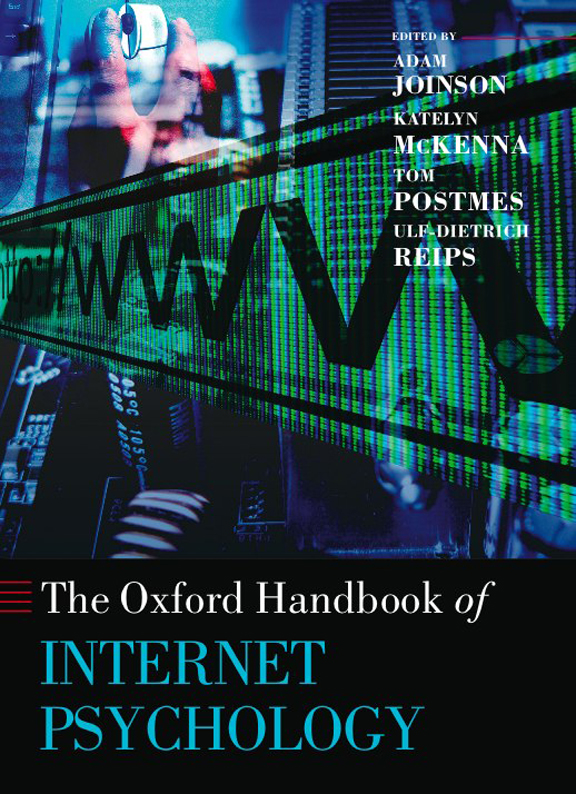
Home » Cyberculture » Book Review: The Oxford Handbook of Internet Psychology
Book Review: The Oxford Handbook of Internet Psychology
This book is a definite read if you are starting out in web design, social media, interactive design or virtual worlds. Different experts in each chapter of the book offers detailed information when it comes to human/computer interaction, online behavior analysis and cyberpsychology. This book is actually what inspired me to start this blog because after reading it, it really opened me up in understanding how we communicate with one another online everyday. More and more people use the internet to work, find relationships, contact family and friends and keep a daily journal of their lives. At first, social media platforms such as Twitter, Facebook, MySpace and even the virtual world of Second Life were a means to communicate with friends, family as well as meet new people with common interests; now companies are marketing their campaigns around these sites to expand their business and hopefully build customer loyalty. Even news services are posting updates newsbreaks and users post tips and links to particular sites from cooking recipies to web design and counselors work with patients online who fear opening up in the “real world.”
This is definitely a great source to reference from when it comes to using social media for your business, designing websites and implementing interactive applications for the phone and the web. I really enjoyed the chapters that involved the concepts of virtual communities, collective intelligence, online social collaboration and the online social identity. The human emotion also plays a huge part once computer interaction takes place online and there is alot of research that still continues today that I will post later on. I got my book at Amazon for a pretty good price and I managed to highlight great facts that helps me with my academic study, some I will post below.
In a study of over one hundred students who had formed relationships online, reports of lying were relatively infrequent.
Agents are programmes that have self-presence in creation of content can mimic interpersonal behaviours. In addition, humans use their social rules in their interactions with computers.
Technology further allows people to attempt control information about who they are and others to attempt to control such information as well, raising concerns about privacy, power and anonymity in a world now ubiquitous with information technology.
Related articles
- Future of Books: Innovation, Please (babyfruit.typepad.com)
- Social Media in the M.B.A. Classroom (usnews.com)
- Social Media + Business = Branding (socialmediaclub.org)